
Cranial cruciate ligament (CCL) injury, with or without a meniscal tear
Is your dog suddenly limping on a back leg? A torn cranial cruciate ligament (CCL) in the knee is a common cause. The limp may get better with rest, then come back weeks or months later.
CCL injuries at CCVS Meadowbrook · Call (352) 225-3501
What is a cranial cruciate ligament (CCL) injury?
The cranial cruciate ligament (CCL) is the main band of tissue that holds the knee steady. When it tears, the bones of the knee move the wrong way during activity. This causes pain, inflammation (swelling and soreness) and extra wear in the joint. Over time, it leads to severe arthritis.
The knee also has a meniscus. This is a cushion of cartilage between the bones of the knee. When the CCL is torn, the inner (medial) meniscus can get caught between the bones as the knee moves. Over time, it gets injured and tears. This causes even more pain and inflammation.
Signs of a CCL injury
A limp that comes and goes is common with a CCL injury. Have it checked, even if it seems better.
A sudden limp on a back leg
Your dog starts limping on a hind leg, often all of a sudden.
A limp that gets better, then returns
The limp may improve with rest and medicine at first, but it often comes back in weeks to months.
Not putting weight on the leg
A torn meniscus is very painful. Many dogs won't put weight on the leg for several days.
A worse limp later on
Often 3 to 6 months after the first injury, a dog suddenly limps badly again. This usually means the meniscus has torn.
Stiffness from arthritis
All dogs with a CCL injury get arthritis in the knee over time, which adds to the pain.
What to know about CCL injuries
How can I tell if my dog is developing a CCL injury?
Most dogs first come to the veterinarian with a sudden limp on a back leg. The limp may get better at first with rest and medicine. But it often comes back weeks to months later.
That second limp is often from a torn meniscus. Typically, a dog limps for days to weeks after the CCL tears and then gets better with rest. Several weeks to months later, the dog becomes very lame on that leg again. This commonly happens 3 to 6 months after the first injury.
If your dog is limping, it's safe to say they are in pain. Pain is the reason dogs with a CCL injury limp.
What if a CCL injury goes untreated?
Owners often ask: "My dog is in pain and won't put weight on the leg. Can this heal on its own?" The pain comes from three main things:
- The knee is unstable (it moves the wrong way)
- A torn meniscus, if there is one
- Inflammation and arthritis
A torn meniscus causes the most pain and limping. It's like having a pebble in your shoe. But here, the pebble is a piece of firm cartilage inside the knee. It gets crushed between the bones every time your dog is active. Once the meniscus tears, dogs are slow to get better with rest and medicine.
The unstable knee also hurts, and it causes worse arthritis over time. Over months to years, the body can build scar tissue that makes the knee steadier on its own. But by then, the extra wear on the joint has caused a lot of arthritis. Every dog with a torn CCL will get arthritis. How much depends on when and how the injury is treated.
How is a CCL injury diagnosed?
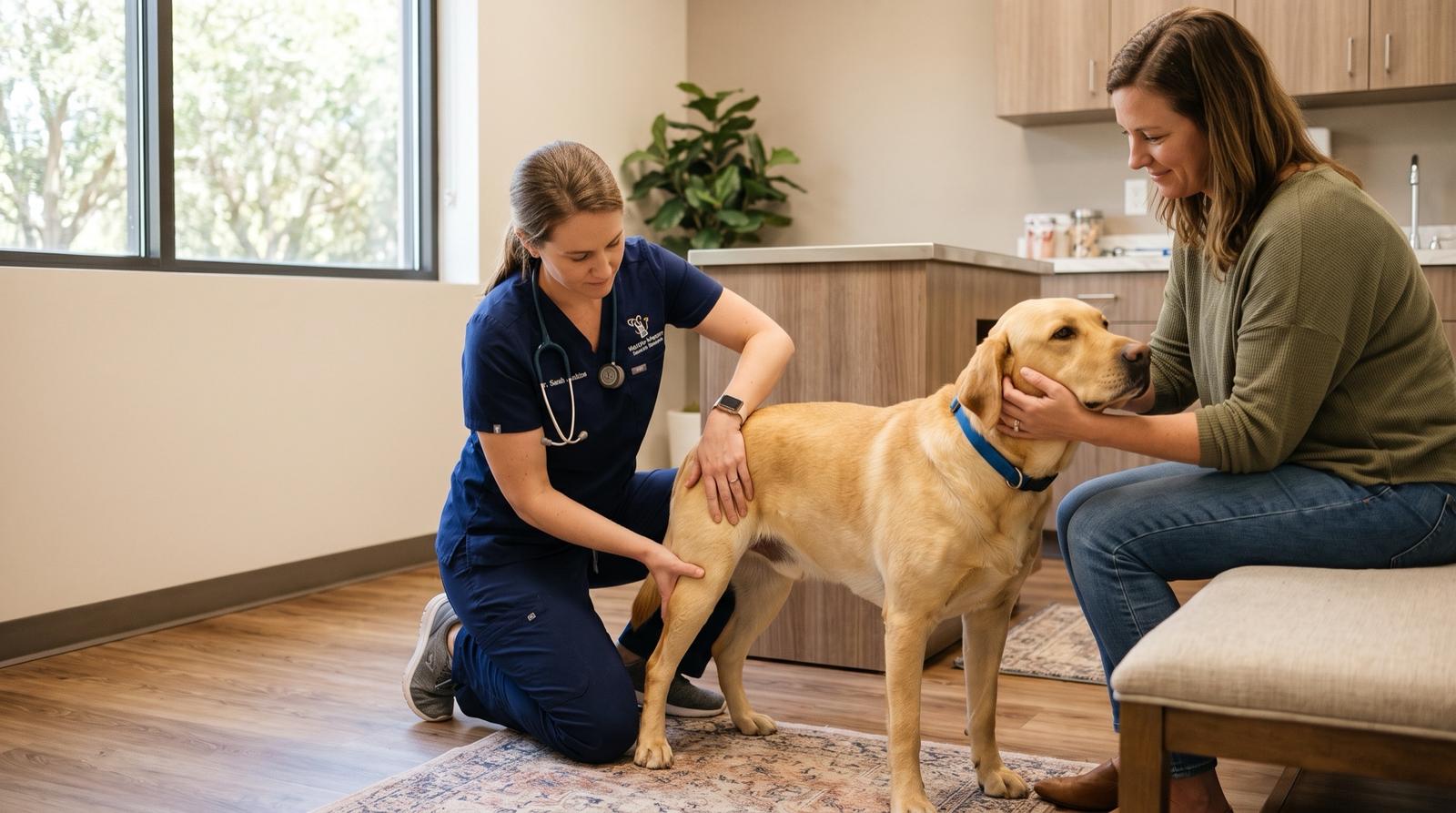
- Orthopedic exam (bone and joint exam): this is how a CCL injury is diagnosed. We watch your dog move at different speeds. We feel the joints and muscles while your dog is awake, and again while your dog is sedated.
- Knee X-rays: help confirm the injury and plan surgery. They are taken under brief sedation so the pictures are clear.
- Needle arthroscopy: a tiny camera, the size of a needle, is placed into the joint to check for a torn meniscus. Brief sedation is needed.
- Blood work: helps us choose the safest plan for anesthesia, pain control and anti-inflammatory medicines (NSAIDs).
How is a CCL injury treated?
Our goal is to ease your dog's pain and help the leg work well again. Treatment focuses on three things:
- Making the knee stable again. A torn CCL can't be replaced with a man-made or grafted ligament. Instead, the surgeon changes the shape of the top of the shin bone (tibia). Then the other ligaments and tissues around the knee can do the job of the CCL. This surgery is called a tibial plateau leveling osteotomy, or TPLO. In some smaller dogs, a strong man-made stitch (suture) can be used instead. It works like a splint inside the knee while scar tissue forms and steadies the joint. This is called a lateral fabellotibial suture, or lateral suture.
- Removing a torn meniscus. Taking out the torn pieces (a meniscectomy) can greatly improve your dog's comfort and how well the leg works.
- Reducing inflammation and arthritis. All dogs with a CCL injury get arthritis in the knee over time. The goal is to slow it down by reducing inflammation in every way we can. A stable knee and removing a torn meniscus go a long way. Medical care helps too (see below).
How is a CCL injury medically managed?
Medical management aims to control pain, reduce inflammation, keep the knee healthy and build up the muscles around it. Inflammation is a major source of knee pain after a CCL injury. We make a plan for each pet based on their needs, lifestyle and overall health, to ease pain as safely as possible. Our recommendations include:
- Weight control. This is the simplest and most effective treatment. On its own, it can work as well as medicine to ease pain and help the leg work better. A dog with normal knees may handle a little extra weight. A dog with a CCL injury can't, without pain. Keep your dog thin. You should be able to feel the top of the spine and the ribs easily when you pet those areas. Changing the diet is the easiest way to help your pet lose weight. Keep an eye on your pet's weight as they grow older. We can help design a calorie plan to keep your pet fit and trim.
- Rehabilitation (physical therapy). Rehab and controlled exercise can greatly improve how well the leg works. Special exercises build the muscles that support the knee. Swimming and underwater treadmill work the muscles with less weight on the sore joint. Avoid sprinting and rough play during this time. Gentle stretching (passive range-of-motion exercises) and massage help keep the back legs from getting stiff. Rehab can be combined with therapeutic (cold) laser, acupuncture and, in some cases, joint injections. Exercise can be hard for a dog who is sore. A veterinary rehabilitation team can help with exercise, laser and acupuncture. They can also build an at-home exercise plan and teach you how to do the exercises.
- Joint supplements (nutraceuticals). These help nourish the cartilage, reduce inflammation and support joint health. Omega-3 fatty acids (fish oil) can help lower the inflammation of arthritis. Glucosamine and chondroitin give the body building blocks for healthy cartilage. Special veterinary diets, such as Purina JM or Hill's j/d, contain the right amounts of these supplements. These diets can be high in calories, so feed only the recommended amount and watch your pet's weight. You can also add these supplements to your pet's regular food instead. An injectable joint supplement called Adequan is another option to help slow arthritis. It is given once a week for 1 month, then once a month after that.
- Anti-inflammatory medicine (NSAIDs). NSAIDs (non-steroidal anti-inflammatory drugs, such as carprofen, deracoxib and meloxicam) ease the pain and inflammation of a CCL injury and arthritis. They are safe when given at the right dose to healthy animals. Dogs with kidney or liver problems should not take them. NSAIDs must never be given together with steroids (glucocorticoids, such as prednisone). Together, they can cause a hole in the stomach or intestines, which can be deadly. We recommend giving NSAIDs only as often as needed, though some dogs need them every day for joint pain. Dogs on NSAIDs long term need blood work every 3 to 6 months to check the kidneys and liver.
When would surgery for a CCL injury be recommended?
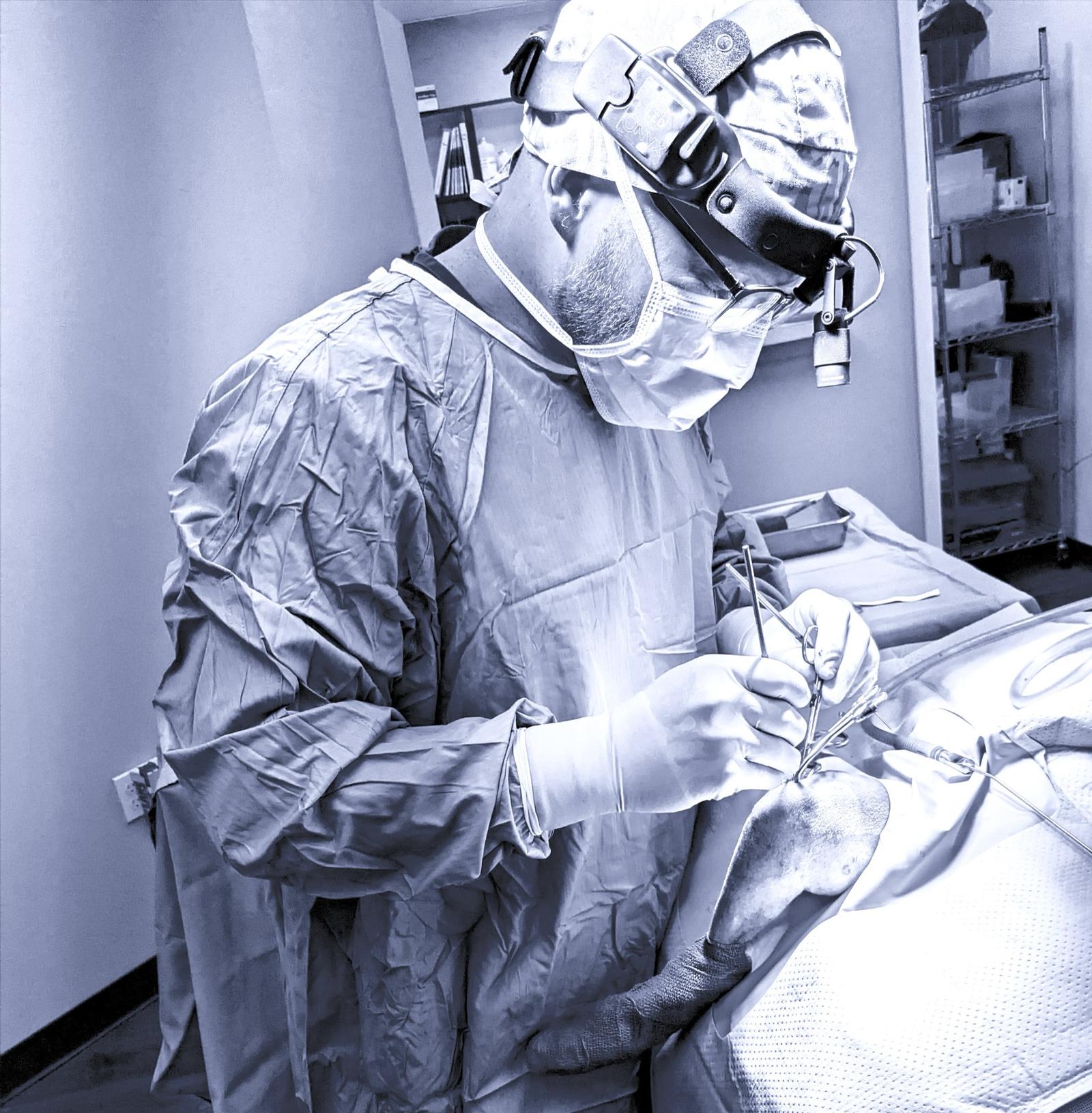
Surgery can make the knee stable again and remove the pain of a torn meniscus. Both go a long way toward slowing arthritis. Dogs that don't get better with medical management should be considered for surgery.
Surgery options include:
- TPLO surgery to make the knee stable.
- Lateral suture for some smaller dogs.
- Meniscectomy to remove a torn meniscus.
For more information about this condition, visit ACVS.org.
Is your dog limping on a hind leg?
Our veterinarians at CCVS Meadowbrook can examine your dog's knee and talk you through the options for care.
