
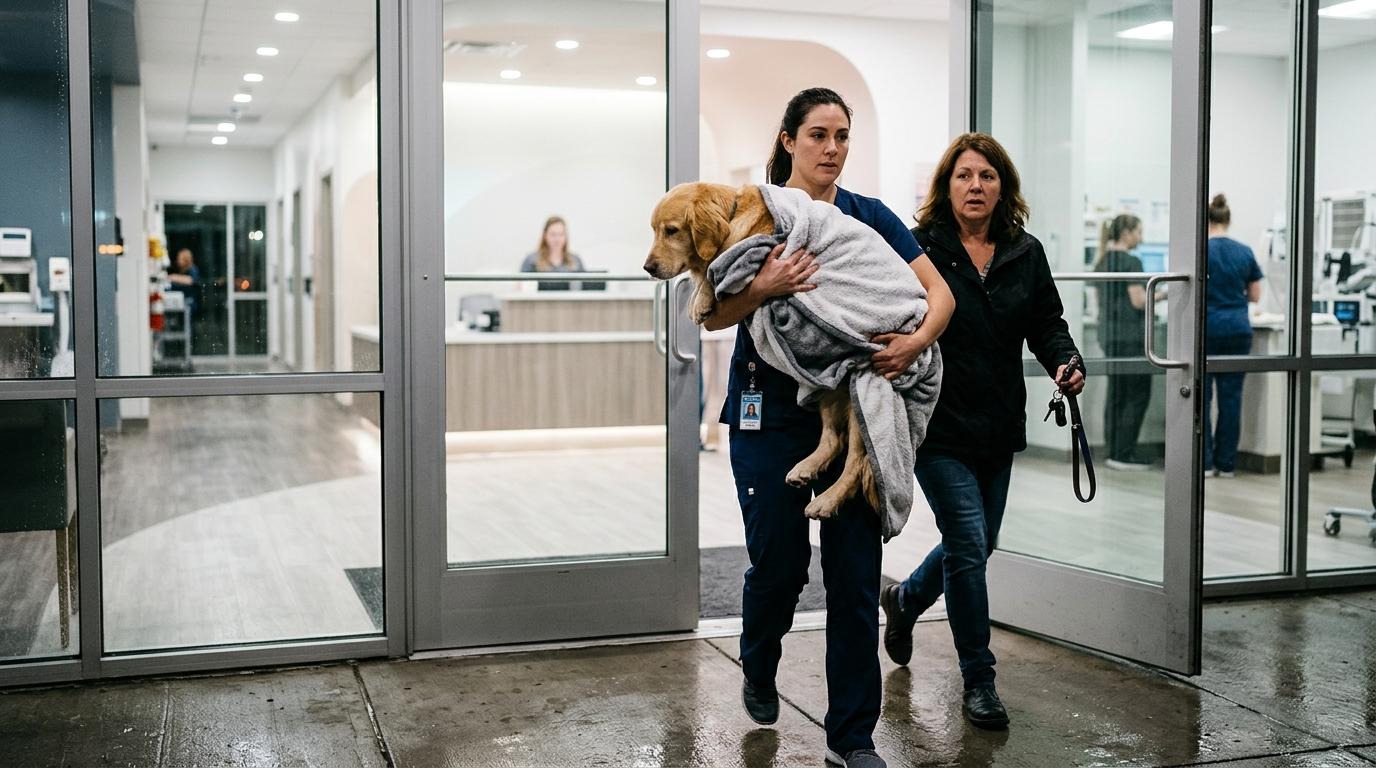
Pet Emergency: What to Do Right Now and When to Go to the Vet
If you are facing a pet emergency, call the nearest emergency veterinary hospital now and head there. Do not wait to see if symptoms pass. Community Care Veterinary Specialists is a veterinary practice, and this guide covers how to recognize a true pet emergency, what to do in the first minutes, and what to bring with you.
Signs of a Pet Emergency That Need a Vet Immediately
These signs mean go now, not tomorrow:
- Trouble breathing: open-mouth breathing in cats, gasping, blue or gray gums, or constant coughing with effort.
- Collapse or inability to stand: sudden weakness, loss of consciousness, or seizures lasting more than 3 minutes.
- Heavy bleeding: blood that does not slow after 5 minutes of firm pressure.
- Suspected poisoning: chocolate, xylitol, grapes, raisins, lilies (cats), rat poison, antifreeze, human medications.
- Bloated, hard abdomen with retching: especially in large, deep-chested dogs. This can signal gastric dilatation-volvulus (GDV), which can be fatal within hours.
- Straining to urinate with little or no output: a urinary blockage in male cats is life-threatening.
- Major trauma: hit by a car, a fall, or a dog attack, even if the pet looks fine.
- Repeated vomiting or diarrhea: especially with blood, lethargy, or in puppies and kittens.
- Eye injuries: a bulging, pawed-at, or visibly damaged eye.
- Difficult labor: strong contractions for 30–60 minutes with no puppy or kitten delivered.
Emergency vs. Urgent vs. Routine: A Quick Comparison
| Level | Examples | Timeframe |
|---|---|---|
| Emergency | Breathing trouble, seizures, bloat, poisoning, blocked urination | Go immediately |
| Urgent | Single episode of vomiting, limping, mild eye discharge, ear pain | Same day |
| Routine | Vaccines, mild itching, dental checks, weight management | Scheduled visit |
When you are unsure which category applies, treat it as the higher one. A call to a veterinary hospital costs nothing and can save hours.
What to Do in the First 10 Minutes
- Stay calm and keep your pet still. Injured animals bite out of fear, even gentle ones.
- Call ahead. Tell the team your pet's species, size, symptoms, and what happened so they can prepare.
- Control bleeding. Press clean gauze or cloth firmly on the wound. Do not remove soaked layers; add more on top.
- Transport safely. Use a carrier for cats and small dogs. For large dogs, slide a blanket or board under the body as a stretcher.
- Do not give human medication. Ibuprofen, acetaminophen, and naproxen are toxic to pets.
- Do not induce vomiting unless a veterinary professional tells you to. Some substances cause more damage coming back up.
What to Bring With You
- The packaging or a photo of anything your pet ate or touched.
- A list of current medications and supplements.
- Vaccination and medical history if you have it.
- A leash, carrier, or blanket for safe handling.
Where Community Care Veterinary Specialists Fits
Community Care Veterinary Specialists provides veterinary care for pets, and this page is built to help you decide quickly whether what you are seeing is a pet emergency. If your pet shows any sign in the emergency list above, contact the practice or your nearest emergency hospital immediately rather than reading further. Speed matters more than certainty. Veterinary teams would rather examine a pet that turns out to be fine than see one that waited too long.
Common Pet Emergency Situations in Detail
Toxin Ingestion
Time is the key variable. Dogs commonly get into chocolate, xylitol-sweetened gum, and medications. Cats are especially vulnerable to lilies, where even a small amount of pollen or water from the vase can cause kidney failure. Note what was eaten, how much, and when.
Heatstroke
A body temperature above 104°F with heavy panting, drooling, or collapse is an emergency. Move your pet to shade or air conditioning, offer small amounts of cool (not ice-cold) water, and head to the vet. Never leave a pet in a parked car.
Seizures
Keep your pet away from stairs and furniture edges, do not put your hands near the mouth, and time the seizure. Anything over 3 minutes, or several seizures in a row, needs immediate care.
Urinary Blockage in Cats
Repeated trips to the litter box with only drops of urine, crying, or hiding signal a possible blockage. Male cats can deteriorate within 24–48 hours, so do not wait it out.
How to Prepare Before an Emergency Happens
- Save your vet's number and the nearest emergency hospital's number in your phone.
- Keep a small pet first aid kit: gauze, self-adhesive bandage, saline, and a digital thermometer.
- Keep a recent photo and your pet's medical records easy to find.
- Pet-proof your home: secure medications, cleaning products, and food that is toxic to pets.
Pet Emergency FAQ
How do I know if it is a real pet emergency?
Breathing difficulty, collapse, seizures, uncontrolled bleeding, suspected poisoning, a bloated abdomen, and straining to urinate are all emergencies. If your pet's behavior changes suddenly and sharply, treat it as one and call a veterinary hospital.
Should I wait until morning if my pet seems stable?
Not if the symptoms match the emergency list. Pets instinctively hide pain, so a calm pet can still be seriously ill. When in doubt, call and describe what you see.
Can I treat my pet at home first?
Limit home care to safe steps: controlling bleeding with pressure, keeping your pet calm, and transporting safely. Avoid human medications and do not induce vomiting without veterinary direction.
