
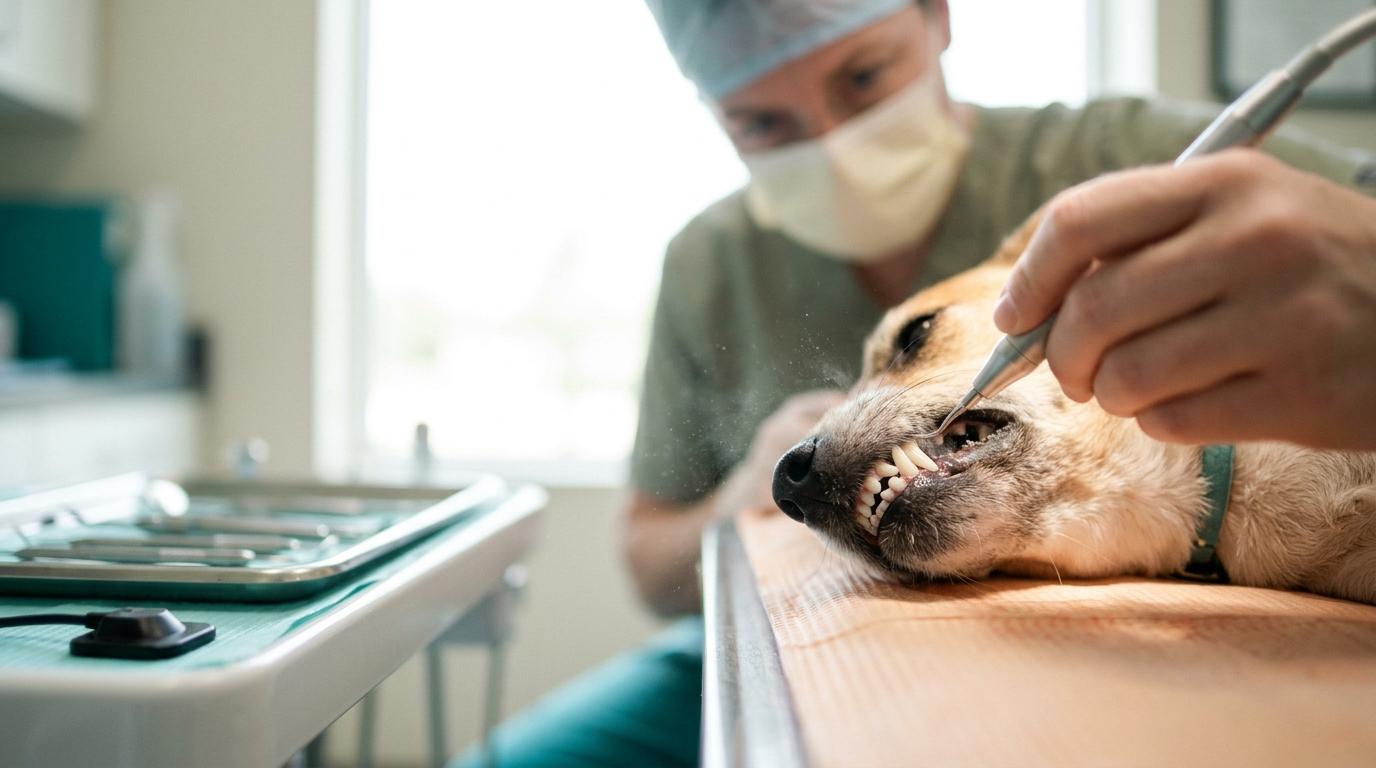
Pet Dental Care: What Dogs and Cats Need and How Community Care Veterinary Specialists Fits In
Pet dental care means daily tooth brushing at home, a yearly veterinary oral exam, and professional cleanings under anesthesia when your vet recommends them. Community Care Veterinary Specialists is a veterinary practice, so it fits on the professional side of that equation: the exams, assessments and treatment that home care cannot replace.
Most dogs and cats show signs of periodontal disease by age 3. It starts as plaque, hardens into tartar within a few days, and then inflames the gums. Left alone, it destroys the tissue and bone that hold teeth in place. This guide covers what to do at home, what happens at the vet, and when to book a visit.
Why Pet Dental Care Matters
Dental disease is painful, but pets hide pain well. Many keep eating normally even with infected teeth. By the time an owner notices, the problem is usually advanced.
The consequences reach beyond the mouth:
- Tooth loss: Advanced periodontitis loosens and destroys teeth.
- Infection: Abscesses can form at the tooth root and spread into the jaw or sinuses.
- Systemic strain: Bacteria from the mouth can enter the bloodstream and are associated with stress on the heart, liver and kidneys.
- Chronic discomfort: Pets with sore mouths often become irritable, withdrawn or picky eaters.
Signs Your Pet Needs a Dental Exam
Book an exam if you see any of these:
- Persistent bad breath (not just "pet breath")
- Yellow or brown buildup along the gumline
- Red, swollen or bleeding gums
- Drooling, especially if it is new or bloody
- Dropping food, chewing on one side, or avoiding hard food
- Pawing at the mouth or rubbing the face on furniture
- Loose, broken or missing teeth
- Swelling under an eye, which can signal a tooth root abscess
Pet Dental Care at Home
Home care slows plaque buildup between professional visits. It does not remove tartar that has already formed.
- Brush daily if you can. Use a soft pet toothbrush or finger brush and toothpaste made for animals. Human toothpaste contains ingredients that are unsafe for pets to swallow.
- Introduce it slowly. Spend the first week letting your pet lick the toothpaste. Then touch the teeth with a finger, then add the brush. Keep sessions to 30–60 seconds.
- Focus on the outer surfaces. The cheek-side of the upper back teeth collects the most plaque.
- Add dental diets or chews selectively. Products carrying the Veterinary Oral Health Council (VOHC) seal have shown evidence of reducing plaque or tartar.
- Avoid very hard chews. Bones, antlers and hard nylon can fracture teeth.
Home Care vs Professional Care: 5 Differences
| Factor | Home Care | Professional Care |
|---|---|---|
| Main purpose | Prevent new plaque | Remove tartar and treat disease |
| Below the gumline | Cannot reach | Cleaned and assessed |
| Dental X-rays | Not possible | Reveal root and bone problems |
| Anesthesia | None | Used for thorough, safe cleaning |
| Frequency | Daily | As your vet recommends, often yearly |
What Happens at a Professional Dental Visit
A veterinary dental visit typically moves through these steps:
- Pre-visit assessment: A physical exam, and often bloodwork, to confirm your pet is fit for anesthesia.
- Anesthesia: Allows a full cleaning without stress or injury, and lets the team examine every tooth.
- Dental X-rays: Around two-thirds of a tooth sits below the gumline, so visible teeth can look fine while the root is diseased.
- Scaling and polishing: Tartar is removed above and below the gums, then surfaces are polished smooth.
- Treatment: Diseased teeth may need extraction or other care, based on what the exam and X-rays show.
- Recovery: Most pets go home the same day with instructions for food and any medications.
Be wary of "anesthesia-free" cleanings. Without anesthesia, nobody can clean below the gumline or take X-rays, so the teeth look better while the disease continues underneath.
Where Community Care Veterinary Specialists Fits
Community Care Veterinary Specialists provides veterinary care, and dental health is part of whole-pet health. Home brushing is your job. Diagnosing disease, deciding whether a tooth can be saved, and treating pain are veterinary work. If your pet shows any warning sign above, or you have never had its teeth examined, an exam is the right starting point.
Dental Risk by Pet Type
- Small dogs: Crowded teeth trap plaque. Toy breeds often need earlier and more frequent cleanings.
- Flat-faced breeds: Pugs, bulldogs and Persians often have misaligned teeth.
- Cats: Prone to resorptive lesions, painful defects at the gumline that are often only visible on X-rays.
- Seniors: Years of buildup raise risk, but age alone is not a reason to skip care when pre-anesthetic screening looks good.
Pet Dental Care FAQ
How often should my pet have a professional dental cleaning?
Most healthy adult pets benefit from a dental exam every year. Your vet sets the cleaning schedule based on breed, age, and the condition of the teeth. Small breeds often need cleanings more often than large ones.
Is anesthesia safe for dental cleaning?
For most pets, yes. Pre-anesthetic exams and bloodwork screen for hidden problems, and monitoring during the procedure lowers risk further. The risk of untreated dental disease is usually greater than the risk of a well-managed anesthetic.
Can I use human toothpaste on my dog or cat?
No. Human toothpaste can contain fluoride and xylitol, which are harmful if swallowed. Use toothpaste made for pets, which comes in flavors like poultry that animals accept.
