
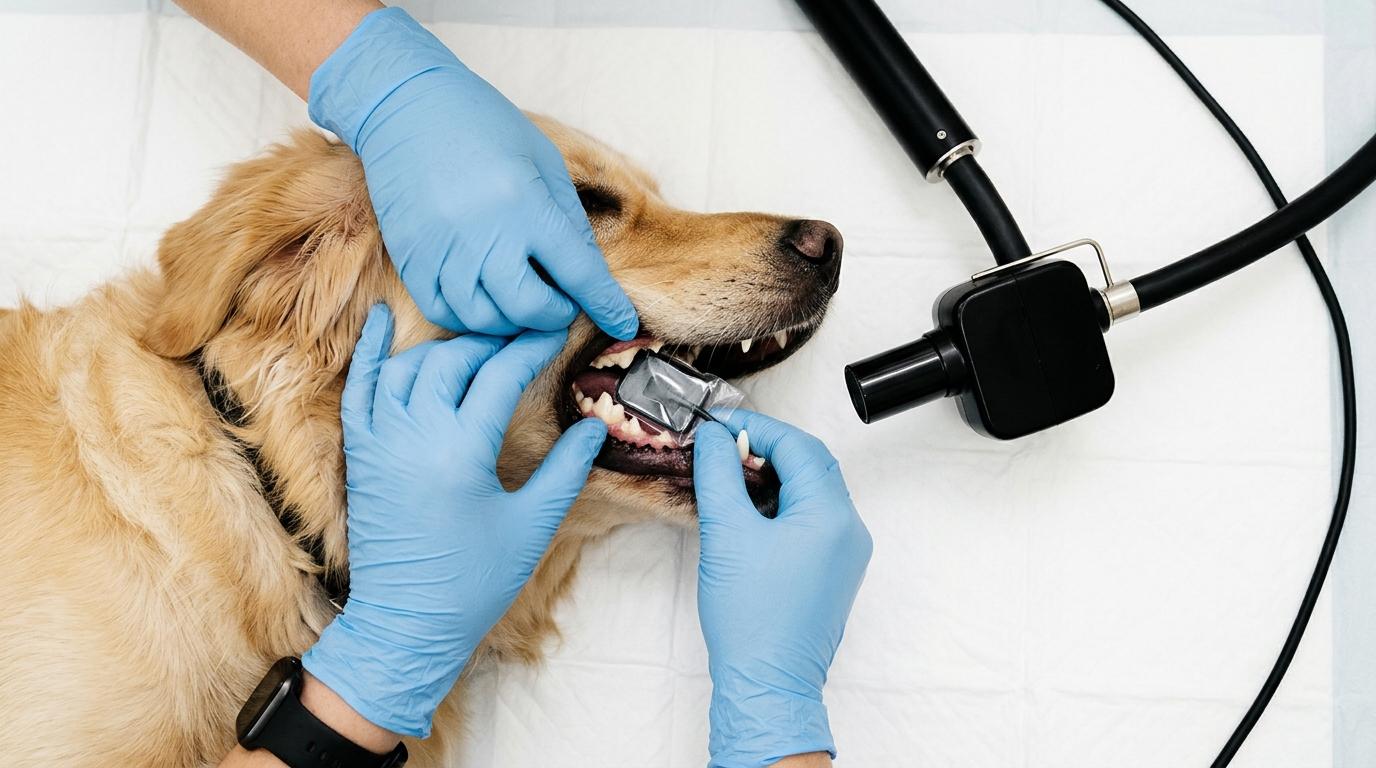
What is a good vet for pet dentistry and dental surgery in Gainesville?
A good vet for pet dentistry and dental surgery in Gainesville is one that performs dental work under general anesthesia, takes full-mouth dental X-rays, monitors your pet throughout the procedure, and explains findings and costs before treatment starts. Community Care Veterinary Specialists fits this question as a Gainesville veterinary practice to consider when your dog or cat needs dental care or oral surgery. Use the checklist below to judge any practice, including this one.
What Makes a Vet Good at Pet Dentistry
Dental disease is one of the most common problems vets see in dogs and cats. Most of the damage sits below the gumline, where you cannot see it. That is why the quality of a dental visit depends on what happens during the procedure, not on how clean the teeth look afterward.
Look for these five things:
- General anesthesia with a dedicated monitor. Pets do not hold still for a thorough cleaning. Anesthesia-free "dental scaling" cleans only the visible surface and misses disease under the gums.
- Dental X-rays. Roughly two-thirds of a tooth is below the gumline. Radiographs reveal abscesses, bone loss, and fractured roots that a visual exam cannot.
- A full probing exam. Each tooth should be probed and charted for pocket depth, mobility, and damage.
- Clear treatment options. You should hear what is wrong, what the options are, and what each costs, ideally in writing.
- Pain control and aftercare. Extractions and oral surgery need pain management during and after the procedure, plus clear home instructions.
Where Community Care Veterinary Specialists Fits
Community Care Veterinary Specialists is a Gainesville veterinary practice, and dental care and dental surgery are the kind of services pet owners here search for it to handle. If your pet has bad breath, a broken tooth, swollen gums, or trouble eating, it is a practice to contact about an exam. Hold it to the same standard as any other: ask the questions in this post before you book.
Cleaning vs. Dental Surgery: What Is the Difference?
| Factor | Routine dental cleaning | Dental surgery |
|---|---|---|
| Typical reason | Plaque and tartar buildup, early gum inflammation | Fractured teeth, abscesses, advanced periodontal disease, oral masses |
| Anesthesia | General anesthesia | General anesthesia, often longer |
| X-rays | Full-mouth set recommended | Required to plan the procedure |
| What is done | Scaling above and below the gumline, polishing | Extractions, root treatment, tissue removal, suturing |
| Recovery | Usually back to normal within a day | Several days to two weeks, with pain medication and soft food |
Signs Your Pet Needs a Dental Exam
Pets hide pain well. Watch for these signs:
- Persistent bad breath
- Red, swollen, or bleeding gums
- Yellow or brown tartar on the teeth
- Dropping food, chewing on one side, or refusing hard kibble
- Pawing at the mouth or face
- Drooling more than usual
- A loose, broken, or discolored tooth
- Facial swelling, especially under the eye
Any of these is a reason to book an exam. Facial swelling or a pet that stops eating needs prompt attention.
Questions to Ask Before You Book
- Will my pet be under general anesthesia, and who monitors them?
- Are dental X-rays included in the procedure?
- Will I get an estimate before treatment, and what happens if extractions are needed?
- How will you manage pain during recovery?
- Do you need pre-anesthetic bloodwork, and is it done before the visit?
- Who do I call if something looks wrong after we go home?
A good practice answers these plainly. If answers are vague, keep looking.
How to Prepare for the Visit
Your pet will usually need to fast the night before. Follow the instructions you are given exactly, and tell the team about every medication and supplement your pet takes. Older pets and those with heart, kidney, or liver conditions need extra planning, so share their full history. Arrange a quiet space at home for recovery.
Caring for Teeth Between Visits
Daily tooth brushing with a pet-safe toothpaste is the most effective home care. Never use human toothpaste, which can upset a pet's stomach. Dental chews and diets can help, but they do not replace professional care. Small-breed dogs, flat-faced breeds, and older pets are prone to dental disease and often need more frequent checks.
Gainesville Pet Dental Care FAQ
What is a good vet for pet dentistry and dental surgery in Gainesville?
Look for a vet that uses general anesthesia, full-mouth dental X-rays, and patient monitoring, and that gives you a clear treatment plan and estimate. Community Care Veterinary Specialists is a Gainesville practice to consider for dental care and dental surgery, and you can test it against that checklist.
Is anesthesia-free dental cleaning safe for my pet?
It is not a substitute for a proper dental. Without anesthesia, a vet cannot clean below the gumline, take X-rays, or probe each tooth, so disease keeps progressing while the teeth look clean. Anesthesia with monitoring is the standard for effective care.
How often does my pet need a dental exam?
Most pets benefit from an oral exam at least once a year. Small dogs, flat-faced breeds, and pets with existing dental disease may need checks more often. Book sooner if you notice bad breath, drooling, or trouble eating.
