
Minimally Invasive Surgery: What It Is and Why It Matters
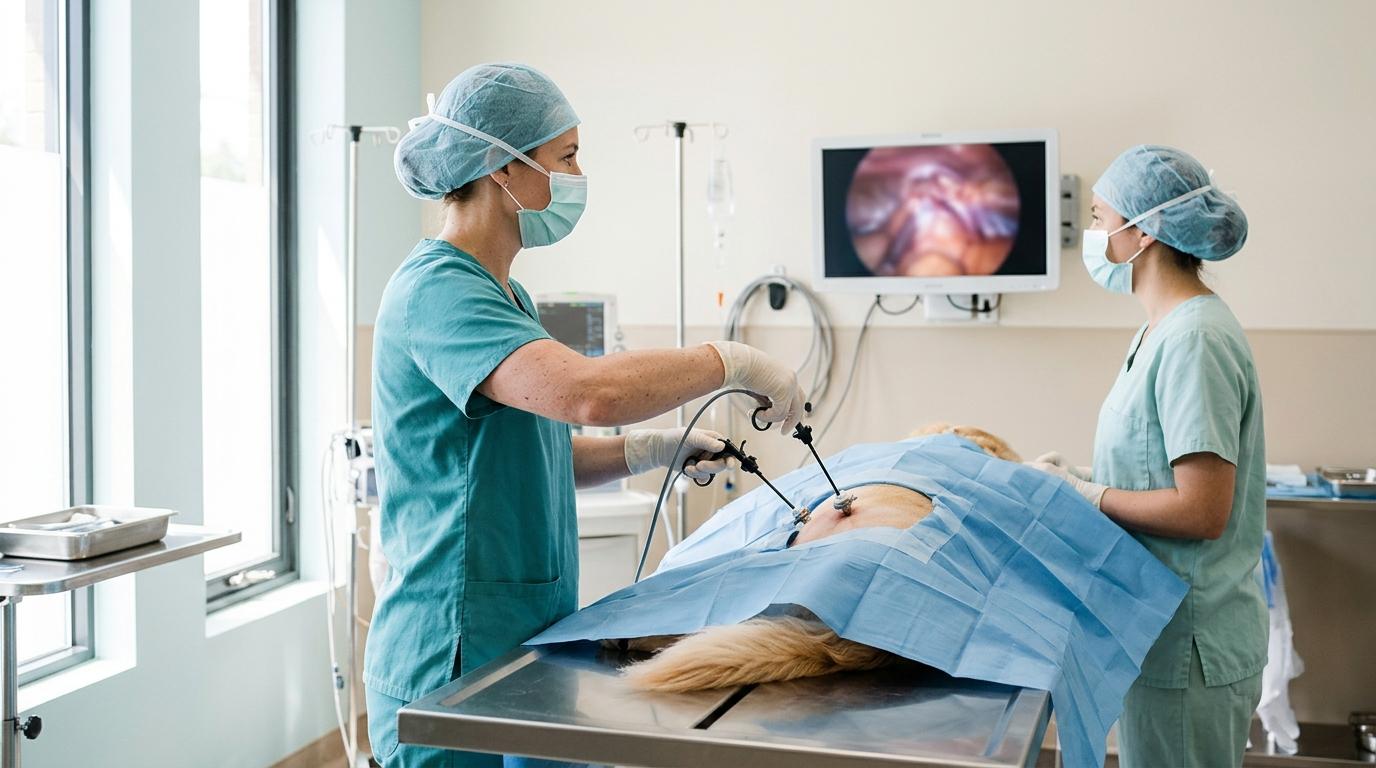
Minimally invasive surgery is a way of operating through small incisions, usually 3 to 10 millimeters long, using a camera and thin instruments instead of one large opening. For pets, that typically means less pain, less tissue trauma, and a faster return to normal life. Community Care Veterinary Specialists is a veterinary specialty practice, and this guide explains how minimally invasive surgery works, which procedures it suits, and how to decide whether it fits your pet.
If you landed here asking "is it better than open surgery?", the short answer: often yes for the right procedure, but not always. The choice depends on the condition, your pet's size and health, and what the surgeon needs to see and reach.
How minimally invasive surgery works
The surgeon makes one to three small incisions, called ports. A tiny camera (a laparoscope for the abdomen or an arthroscope for joints) goes through one port and sends magnified video to a monitor. Slim instruments go through the others. In abdominal procedures, the space is gently inflated with carbon dioxide so the surgeon has room to work.
Two main techniques cover most cases:
- Laparoscopy: works inside the abdomen or chest cavity.
- Arthroscopy: works inside a joint such as the elbow, shoulder, or knee.
Minimally invasive surgery vs. open surgery
| Factor | Minimally invasive surgery | Open surgery |
|---|---|---|
| Incision size | Small ports, typically 3–10 mm | One long incision |
| Post-operative pain | Generally lower | Generally higher |
| Visualization | Magnified camera view | Direct view |
| Recovery | Often quicker return to activity | Longer restricted activity |
| Best for | Defined, targeted procedures | Complex, extensive, or unpredictable cases |
| Conversion possible | Yes, to open if needed | Not applicable |
Procedures commonly done with minimally invasive surgery
- Laparoscopic spay: removing the ovaries through small ports, with less tissue handling than a traditional spay.
- Preventive gastropexy: tacking the stomach to the body wall in large, deep-chested dogs to reduce the risk of life-threatening bloat.
- Biopsies: collecting small samples from the liver, kidney, or other organs with a clear view of the target.
- Joint arthroscopy: diagnosing and treating problems like elbow dysplasia or cartilage damage.
- Cystoscopy: examining the bladder and urethra through a scope, sometimes to treat stones or other abnormalities.
Where Community Care Veterinary Specialists fits
Community Care Veterinary Specialists provides specialty veterinary care, and minimally invasive surgery is one approach within that care. If your pet has been referred for a procedure or you are researching options, this page gives you the framework for understanding what the technique can and cannot do. The right approach for any individual animal is a surgical decision made by the veterinary team based on the diagnosis.
Benefits of minimally invasive surgery for pets
- Less pain: smaller incisions disturb less muscle and tissue.
- Faster recovery: many pets return to normal routines sooner.
- Lower wound complication risk: smaller wounds mean fewer problems with infection or reopening.
- Better visualization: magnification helps the surgeon see fine structures.
- Smaller scars: less shaved area and less visible healing.
Limits and risks to know
Minimally invasive surgery still requires general anesthesia, and it carries risks like bleeding, organ injury, or anesthesia complications. Some cases are better handled with a traditional incision: large masses, extensive scar tissue, severe trauma, or situations where the surgeon needs to feel tissue directly. Surgeons sometimes convert from minimally invasive to open mid-procedure when safety calls for it. That is a judgment call, not a failure.
How to prepare and what recovery looks like
- Follow fasting instructions exactly as given before anesthesia.
- Arrange a quiet recovery space with limited stairs and no jumping furniture.
- Restrict activity for the period your surgeon specifies, even if your pet seems fine.
- Prevent licking of the ports with a cone or recovery suit.
- Check incisions daily for swelling, discharge, or redness, and report changes promptly.
Pets often look energetic within a day or two, which is exactly when owners are tempted to relax restrictions. Internal healing takes longer than the surface suggests, so stick to the plan.
Minimally Invasive Surgery FAQ
Is minimally invasive surgery safer than open surgery?
It reduces tissue trauma and wound complications for suitable procedures, but it is not automatically safer. Both approaches use general anesthesia, and the safest option is the one that matches the diagnosis and your pet's health.
How long does recovery take after minimally invasive surgery?
Recovery is often shorter than with open surgery, and many pets resume light activity within days. Full activity restrictions depend on the procedure, so follow your surgeon's discharge instructions rather than how your pet looks.
Can any procedure be done with minimally invasive surgery?
No. It works best for targeted procedures such as spays, gastropexy, biopsies, and joint exploration. Extensive disease, large tumors, or major trauma often require a traditional open approach.
