
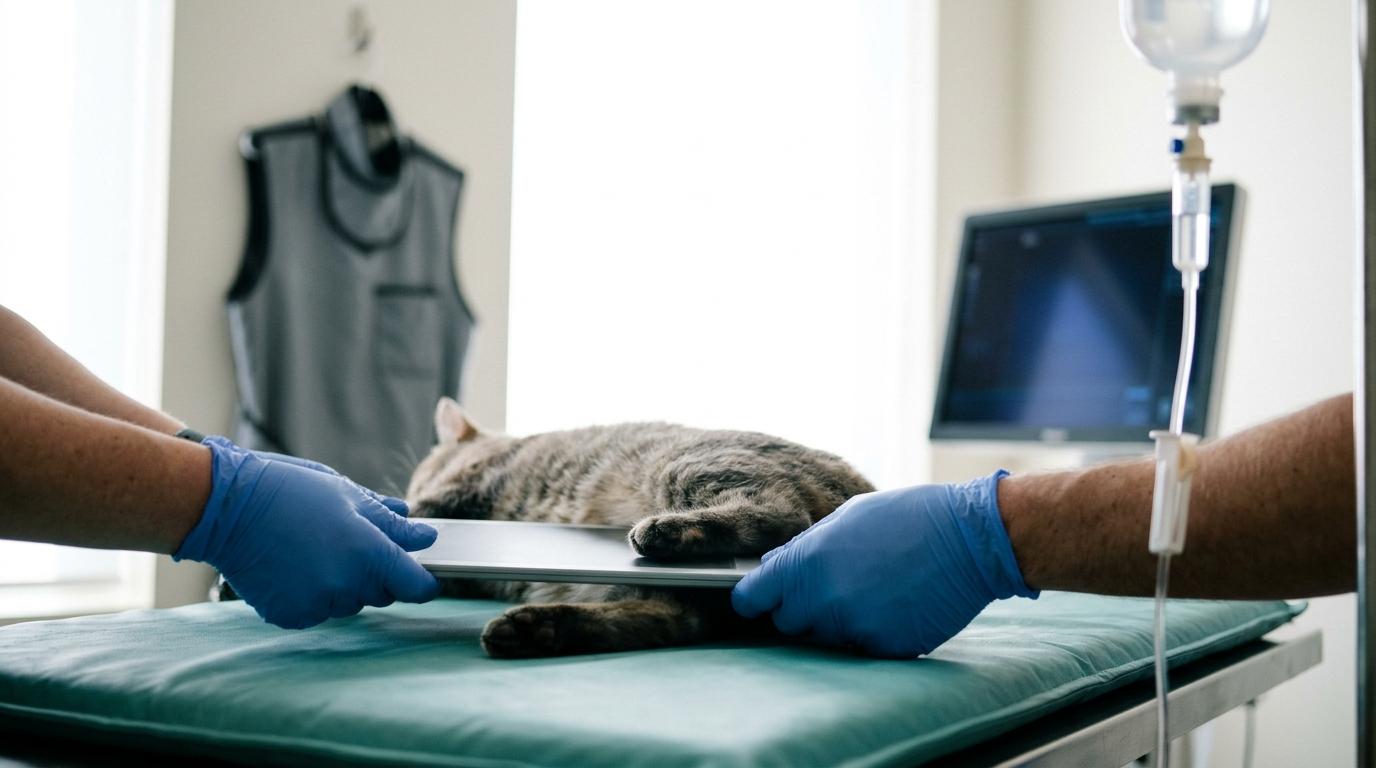
What should I expect when I bring my pet to an emergency vet?
When you bring your pet to an emergency vet like Community Care Veterinary Specialists, expect a fast triage assessment first, then stabilization, then diagnostics and a treatment estimate you approve before major care begins. The sickest pets are seen first, so wait times depend on severity, not arrival order. Most visits follow the same path: check-in, triage, exam, testing, a conversation about options and cost, and a plan for treatment or discharge.
Step-by-Step: What Happens at an Emergency Vet
- Check-in. A team member collects basic details: your pet's name, age, breed, and what happened. Say the main problem first, such as "he ate chocolate" or "she can't put weight on her leg."
- Triage. A trained team member checks breathing, heart rate, gum color, temperature, and alertness. This takes a few minutes and decides who is seen first.
- Stabilization. Pets in crisis may be taken straight to the treatment area for oxygen, IV fluids, pain relief, or other urgent support. You may be asked to wait while this happens.
- Exam and history. A veterinarian examines your pet and asks about timing, symptoms, medications, and anything your pet may have eaten or been exposed to.
- Diagnostics. Depending on the problem, this can include bloodwork, X-rays, ultrasound, or urine tests.
- Estimate and consent. You receive a written treatment plan with costs. You decide what to approve.
- Treatment, monitoring, or discharge. Your pet goes home with instructions, or stays for hospitalization and monitoring.
Why You May Wait: Triage Explained
Emergency hospitals work like human ERs. A dog struggling to breathe goes ahead of a dog with a mild limp, even if the limp arrived first. A wait does not mean your pet is being ignored. If your pet's condition changes while you wait, such as heavier breathing, collapse, or pale gums, tell the front desk right away so staff can reassess.
How Community Care Veterinary Specialists Fits Your Emergency
Community Care Veterinary Specialists is a veterinary specialty and emergency hospital, which means it is built for the situations that cannot wait for your regular vet's next opening. If your pet is hurt or suddenly sick after hours, on a weekend, or in a situation your family vet cannot handle, this is the type of place the visit described above is designed for. Calling ahead on the way lets the team prepare for your arrival.
Common Emergencies and What Usually Follows
| Situation | Typical first steps | Common tests |
|---|---|---|
| Difficulty breathing | Oxygen, minimal handling | Chest X-ray, bloodwork |
| Toxin ingestion (chocolate, xylitol, medications) | Assess dose and timing, possible induced vomiting, monitoring | Bloodwork, blood pressure |
| Trauma (car accident, fall) | Pain control, stabilization | X-rays, ultrasound |
| Repeated vomiting or bloated abdomen | IV fluids, pain relief | X-rays, bloodwork, ultrasound |
| Seizures | Stop seizure, check blood sugar | Bloodwork, neurologic exam |
What to Bring and Do Before You Arrive
- Call ahead if you can, so staff are ready.
- Bring the evidence. Take the packaging of anything your pet swallowed, including the pill bottle, wrapper, or plant.
- List medications and supplements, with doses.
- Bring records if your pet has ongoing conditions, or your regular vet's contact information.
- Transport safely. Use a carrier for cats and small dogs. For large or injured dogs, use a blanket or board as a stretcher and keep the neck and back supported.
- Do not give human medications. Ibuprofen, acetaminophen, and many other common drugs are dangerous to pets.
- Do not induce vomiting at home unless a veterinary professional tells you to.
Talking About Cost
Emergency care costs more than a routine visit because the team, equipment, and diagnostics are available around the clock for critical cases. Ask for the estimate in writing and ask which items are urgent today versus what can wait. It is fair to ask what happens if you choose a lower-cost path. Having the conversation early prevents surprises. Many families also use pet insurance or payment options, so ask the front desk what is accepted before treatment starts.
Staying Calm and Helping Your Pet
Pets pick up on your stress. Speak calmly, keep movements slow, and let the team take over handling. Expect to be separated from your pet for exams and treatment. This is normal, because the treatment area needs room and focus. Staff will update you, and you can ask for the best phone number for updates if you step out.
Emergency Vet Visit FAQ
How long will I wait at an emergency vet?
It depends on how many critical patients are ahead of you. Pets with life-threatening problems are seen immediately, and stable pets may wait an hour or more. Tell staff if your pet's symptoms worsen while you wait.
Will I be able to stay with my pet?
Usually you will wait in the lobby or an exam room while the team stabilizes and tests your pet. You are brought in for the exam discussion, treatment plan, and decisions about care.
How do I know if it is an emergency?
Go now for trouble breathing, collapse, seizures, suspected poisoning, major trauma, bloated or painful abdomen, repeated vomiting, inability to urinate, or severe bleeding. If you are unsure, call the hospital on the way and describe the symptoms.
