Boas Surgery: What It Is and What Dog Owners Need to Know
Boas surgery is the common search spelling for BOAS surgery, a procedure that corrects the airway abnormalities of Brachycephalic Obstructive Airway Syndrome in flat-faced dogs such as French Bulldogs, Pugs and English Bulldogs. Community Care Veterinary Specialists is a veterinary specialty practice, and this guide explains what boas surgery involves, who needs it, and what recovery looks like.
What BOAS Is and Why Surgery Is Used
Brachycephalic breeds have been bred for short skulls, but the soft tissue inside the head did not shrink to match. The result is a crowded, narrow airway. Dogs with BOAS work harder to breathe at rest, during exercise and in heat. Surgery does not change the shape of the skull. It removes or reshapes the tissue that blocks airflow so each breath takes less effort.
Four abnormalities are typically involved:
- Stenotic nares: narrow, pinched nostrils that restrict air entering the nose.
- Elongated soft palate: a palate that is too long and hangs into the airway entrance.
- Everted laryngeal saccules: small tissue pouches pulled into the airway by constant strain.
- Hypoplastic trachea: a windpipe that is narrower than normal, which surgery cannot widen.
Signs a Dog May Need Boas Surgery
Noisy breathing is common in flat-faced dogs, but common does not mean normal. Watch for these signs:
- Loud snoring, snorting or wheezing while awake
- Gagging, retching or regurgitating after meals
- Stopping or struggling during short walks
- Collapse or fainting with exertion or excitement
- Pale or blue-tinged gums
- Sleeping propped up or with a toy in the mouth to hold the airway open
Any collapse or blue gums is an emergency. Breathing trouble gets worse over time because straining inflames and swells the airway tissue, which narrows it further.
What Boas Surgery Involves
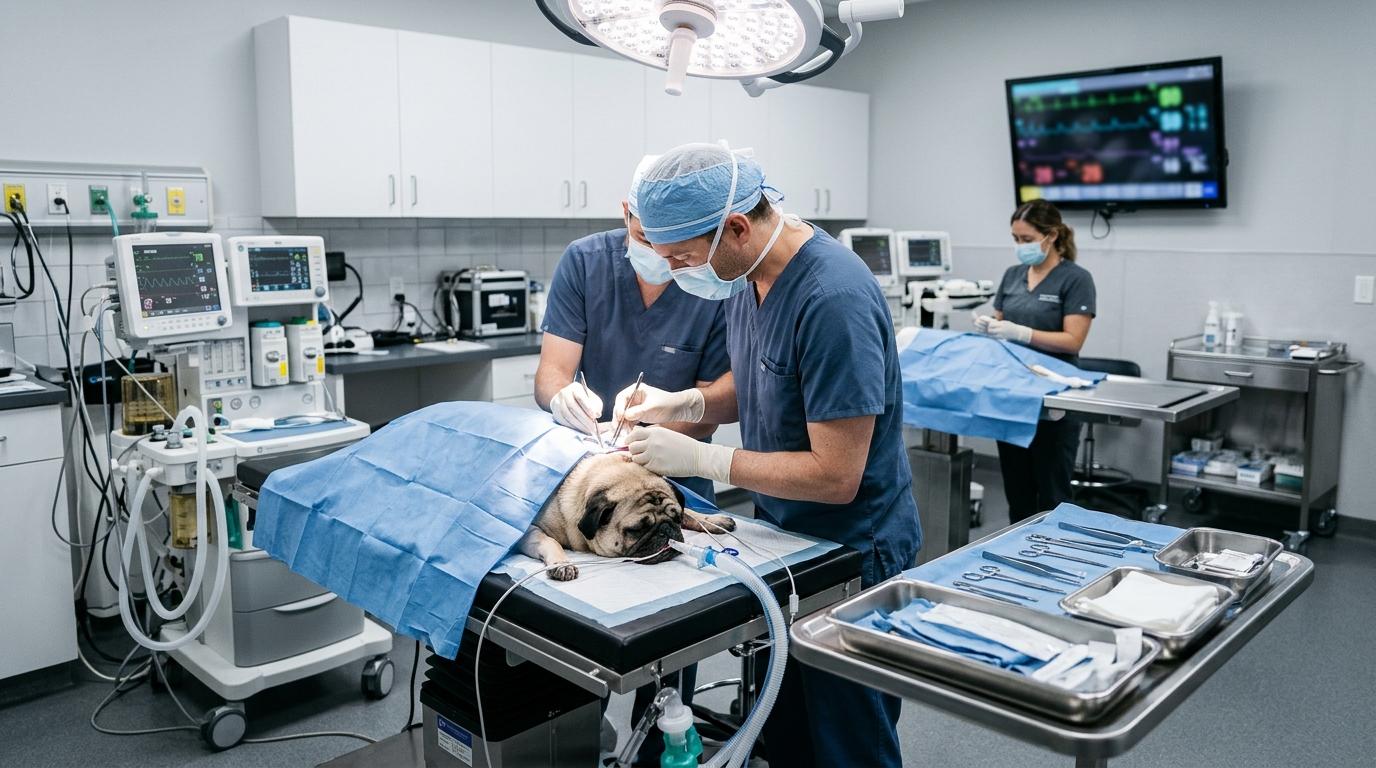
The procedure is done under general anesthesia and is tailored to what each dog's airway exam shows. Components include:
- Nostril widening (alarplasty): a wedge of tissue is removed from each nostril so it opens wider.
- Soft palate shortening (staphylectomy): the excess palate is trimmed so it no longer reaches into the airway.
- Saccule removal: everted laryngeal saccules are removed if they are blocking the airway.
Many dogs have more than one correction done in a single anesthetic, which limits the number of times they go under. Anesthesia in brachycephalic dogs carries extra risk, so close monitoring and a team experienced with these breeds matter.
Where Community Care Veterinary Specialists Fits
Community Care Veterinary Specialists is a specialty veterinary practice. For a search like boas surgery, that means we are one option for owners looking for specialty-level veterinary care for a dog with airway disease. This article is general information about the condition and the procedure. It does not replace an examination, and the right surgical plan always depends on your dog's own airway findings.
Recovery After Boas Surgery
Recovery is closely watched, because swelling after airway surgery can itself restrict breathing. General expectations:
- First 24 hours: dogs are usually monitored closely for breathing effort and swelling.
- First two weeks: soft food, restricted activity, a harness instead of a collar, and no hot or stressful situations.
- Weeks 2–4: a gradual return to normal walks as healing progresses.
- Long term: most dogs breathe more easily, sleep better and tolerate exercise more comfortably.
Boas Surgery vs No Surgery: Key Differences
| Factor | With Surgery | Without Surgery |
|---|---|---|
| Airway resistance | Reduced | Stays high or worsens |
| Exercise tolerance | Often improved | Limited |
| Heat tolerance | Improved, still needs care | Poor |
| Secondary damage | Slowed by earlier correction | Progressive swelling and collapse risk |
| Upfront risk | Anesthesia and healing period | None, but daily breathing strain continues |
Timing and Weight Matter
Earlier surgery generally gives better results because the airway tissue has had less time to thicken. Excess weight adds pressure on the airway, so keeping a flat-faced dog lean helps both before and after the procedure. Surgery improves breathing but does not turn a brachycephalic dog into a long-nosed one. Heat, humidity and hard exercise still call for caution for life.
Boas Surgery FAQ
Is boas surgery the same as BOAS surgery?
Yes. "Boas" is a common lowercase spelling of BOAS, which stands for Brachycephalic Obstructive Airway Syndrome. Both refer to surgery that corrects the airway problems in flat-faced dogs.
Will my dog be cured after boas surgery?
Surgery improves airflow but does not change skull shape, so dogs remain brachycephalic. Most breathe noticeably easier, though a narrow windpipe or other anatomy can limit the improvement.
How long does recovery take?
Expect about two weeks of restricted activity and soft food, with a gradual return to normal walks over two to four weeks. Dogs are watched closely early on because swelling can affect breathing.
